Thursday, February 27, 2014

March-Transition to Spring


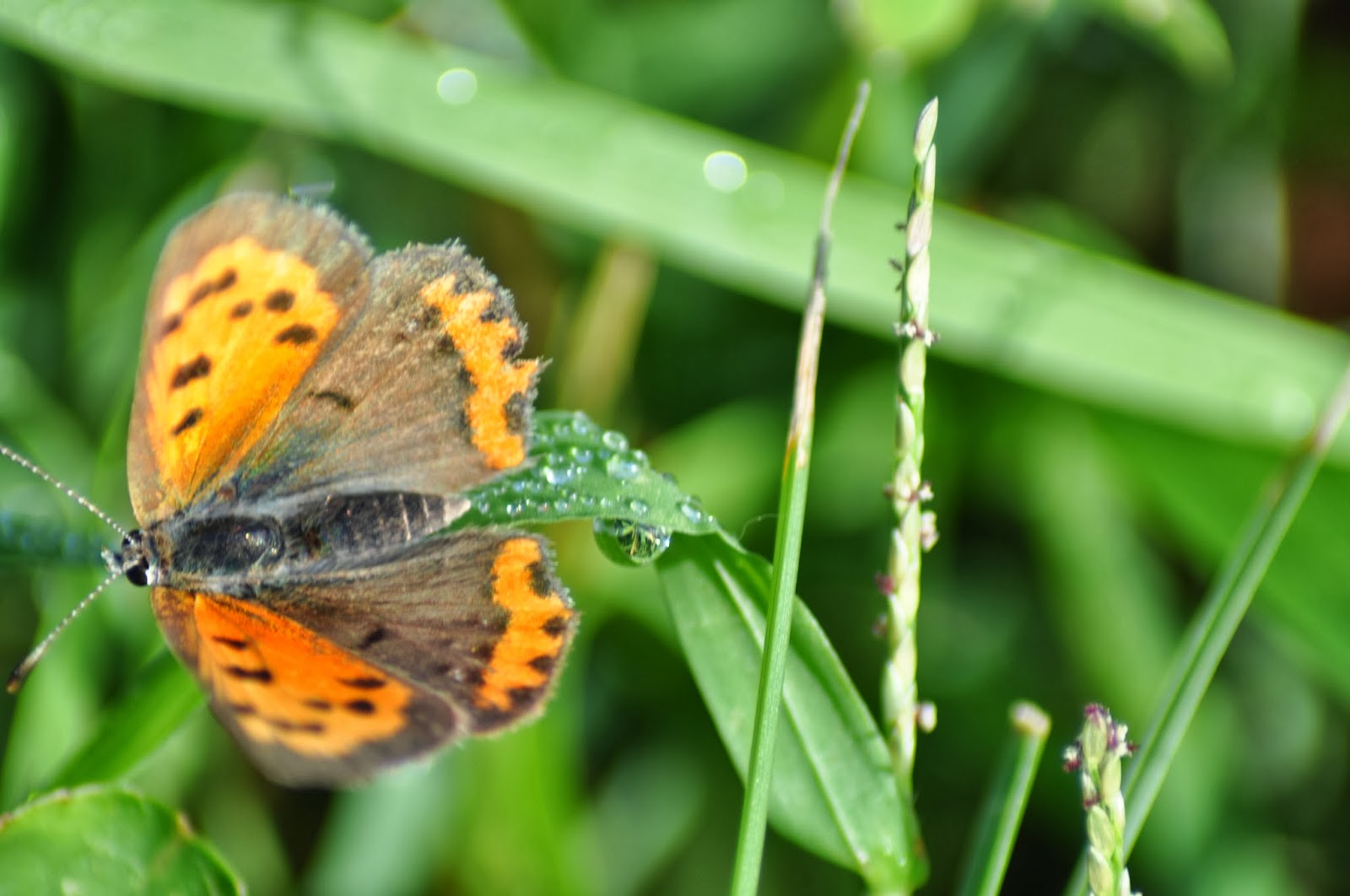
I'm looking forward to seeing my first butterflies this March--mourning cloak, cabbage white, and the American Copper.  I haven't seen a mourning cloak in my brief career as a butterfly watcher, but I have seen the beautiful American Copper and look forward to seeing a growing variety of butterflies this spring.

In addition to butterflies flying, woodcocks mating, and amphibians emerging to migrate to vernal pools to mate and lay eggs, a lot of other creatures will be mating in March, including:  coyotes, skunks, raccoons, bobcats, flying squirrels, shrews, field mice, voles. 

And from earlier matings, babies will be born to eagles, Great Horned Owls, and squirrels.  Screech owls and barred owls will be laying eggs.

I plan to build birdhouses for these three common owls in time for next winter and for more kinds of birds in time for this spring, as well as plant a garden that will attract more butterflies.

Wednesday, February 26, 2014

Two Really Big Shows in March in Ohio

Illustration of woodcock's "Sky Dance" from Aldo Leopold's "Sand County Almanac".

Soon, I hope to visit this vernal pool often, hoping to see migrations of spotted salamanders and other amphibians to the pool from their hibernation areas underground.  They like to lay their eggs in these temporary pools because there aren't fish in them.  This pool is a depression near the Kokosing River that collects snowmelt runoff, helping to prevent flooding of the Kokosing.  (Photographed April 6, 2013, after the migration
After about 45 years, I still remember certain passages from Aldo Leopold's "Sand County Almanac".  One of them is his description of the "Sky Dance" of male woodcocks during mating season, which is April in his native Wisconsin and March in Ohio.

So I was excited to find out last spring that there are woodcocks at the Brown Family Environmental Center at Kenyon College.  I had never seen a woodcock and still haven't, because I forgot they dance in March.  This year I'm remembering.

March also brings the spring migration of spotted salamanders and frogs and other amphibians from their underground hibernation spots to the nearest vernal pool.  I heard this occurs when the first rains of spring falls on a warm morning.   I knew the vernal pond it occurred at on the U.S. Department of Agriculture farm in Maryland where I used to work, and I know a vernal pool at the Brown Center,  but I've never seen that event either, in either state.

I remembered last spring in Ohio but I didn't know that  "warm" can mean about 40 degrees, I thought it meant about 50 degrees.  And I didn't know it might happen in the evening rather than at daybreak.

So I dream of walking through the Brown Center every evening or morning in March.   I know I'll at least make it once a week, starting with March 1 when the Center has its monthly Family Adventure Day, which I always attend anyway! 

Tuesday, February 25, 2014

Birds, Blooms, and Butterflies


We have to be patient waiting for spring.  These red-winged blackbirds were only babes in a pond in Gambier, Ohio, on July 6, 2013.  I admit they were probably a second brood since red-winged blackbird males  are here in late February and the females arrive in early March.  (Photo by Don Comis)


I was looking at an article in last spring's Birds & Bloom magazine and got inspired to start my own list of my favorite signs of spring, mostly in order as I've seen them so far this year:


1.  A red-winged blackbird coming to my feeders.  (Feb. 23 two years in a row.)
2.  Northern robins visiting my feeders or coming to other yards.  (Feb.23 this year, Feb. 9 last year)
3.  Male house sparrow checking out my bluebird houses.  (This year: Feb. 24, Feb. 22, and a day or so earlier.)
4.  Skunk cabbage sprouting.  (I haven't looked for this but Jim McCormac's blog notes he always sees this in either the first or second week of February, and saw them well along in his yard when he checked on February 22.)


But heck, why limit signs of springs to birds and blooms?  Why not butterflies.  I haven't looked for or seen any yet but I have an e-mail report from a Virginia-Maryland group of a sighting of a mourning cloak butterfly.  I think this is the earliest butterfly in both those states and in Ohio.


I also got an e-mail from an Ohio bird group that reported seeing a lot of robins flying in a mixed flock of blackbirds and others.  I know on my drive to Westerville, Ohio, today I saw a lot of medium-sized bird flocks in the air, too far for me to identify.  With the snow flurries today and increasing cold, I can see why birds would be on the move and flocking together.

Monday, February 24, 2014

Northern Robins Trying to Trick Us?

Cedar waxwings I saw, Feb. 9, 2013,  feeding on the berries of two crabapple trees decorating a lawn.  A northern robin was feeding with them.  (Photo by Don Comis)
I saw two robins today, one as I drove down the road leading to our house in Howard, Ohio, and one in my yard again when I got home.  As I drove into the driveway in late afternoon, I flushed a flock of about a dozen mourning doves feeding on fallen seeds, the biggest flock I've had so far at least this winter.  And the robin was nearby.

After I wrote the blog yesterday and thought about the northern robin appearing in a crabapple tree on February 9, 2013, with a flock of cedar waxwings, I began to realize that part of the reason the northern robins become visible suddenly in Feburary may be because their food sources in the woods are running low and they move over to people's crabapple trees which form berries in February.

Maybe the robin hung out with cedar waxwings in the woods as they fed on holly berries and then moved with them in search of crabapple berries?

It's intriguing, too, to think that maybe the robin in my yard has hooked up with a flock of mourning doves since I've seen her twice in the vicinity of doves.  At least both species are ground feeders.

The cold and wind this evening that ends a brief thawing period makes me also think that weather also plays a role in the sudden public appearances of northern robins in February.  Did the warm thaw period  draw them out of the woods, in addition to dwindling food?

Whatever the case, this sudden appearance of two robins near homes in our development makes it even harder to convince people and myself that these are not our spring robins returned!

Sunday, February 23, 2014

A Punctual Red-Winged Blackbird Returns

The red-winged blackbird I saw at my feeders on Feb. 23, 2014 did not have the bright patches of this blackbird which I photographed in breeding season in Maryland on April 11, 2012.  The amazing thing is that my first sighting of a red-winged blackbird at my feeders last winter was on Feb. 23, 2013!  (Photo by Don Comis)

I also saw my first robin at my feeders on Feb. 23, 2014.  I photographed this robin even earlier last winter, eating berries of one of two crabapple trees along Apple Valley Drive, on February 9, 2013.  I believe these robins are northern robins that spent the winter here and will leave as our real spring robins come back from south of us.  I saw one long ago this winter, at the edge of our yard, near woods.  (Photo by Don Comis)
Talk about punctuality!  I saw my first red-winged blackbird this winter, at my feeders this morning, and last winter a red-winged blackbird made its debut on February 23, 2013, right to the day!


And what a morning after my first zero count yesterday!  Eight species in eight minutes, including a second harbinger of spring, my first robin of the winter.  It seemed fat to me but spent a long time under one of my raised feeders.  It could have been eating dropped seed, but it seemed to be digging for worms and insects.


I know the robin is probably a false harbinger of spring because it's likely one of the robins that migrated here this winter from farther north.  Robins are fairly rare at feeders because they're insect eaters, and northern robins are even rarer at feeders because they're shyer and prone to be in secluded wooded areas away from homes.


Still, my guess is it's still too early for our spring robins to return, so it's probably one of those northern robins with its own bold personality, or just one desperate after all this snow.  We can identify!


All in all a great eight minutes that included a northern flicker.  Birdwatching has many lessons for life, including that no matter how many times you're disappointed, you never know when life is going to give you a box of chocolates.

Saturday, February 22, 2014

Day Ends With Gas Attack


This opossum ("Marsi") is very much alive and asleep.  She is not a true hibernator, but will sleep for weeks in cold spells like we've had.  The first possum I've seen this winter on our front deck was on Feb. 19.  This photo was taken during the Ohio Wildlife History Family Adventure Day at Kenyon College.  The Gund Gallery and Brown Family Environmental Center at Kenyon sponsored the day, along with Ohio Nature Education (ONE) and the Public Library of Knox County and Mount Vernon.   The bear skin was donated to ONE.   Technically, the bear isn't a true hibernator either--but they do stay in their dens a lot longer than opossums, skunks, and raccoons.   The groundhog, on the other hand, is a true hibernator.  (Photo by Don Comis)

 
My day ended with skunk "gas" seeping into our living room as I read old Reader's Digest stories to my mother-in-law.  My wife smelled the gas seeping into our basement as well.

I don't know what scared it--maybe one of my cats peeked out the glass doors at it?  Or maybe it scuffled with one of two other nocturnal visitors to our bird feeders in the past four days--first, an opossum and second, a raccoon.  I finally checked and saw that none of our three "guests" are true hibernators--they just sleep long spells, even weeks, in cold winter weather.  I can see why I haven't seen or smelled much of them this winter.

I don't know if it was the cold or the wind or first dibs on attracting a mate this spring, but today I finally identified the bird I first saw in my "bluebird" birdhouse on February 19 as a male house sparrow.  House sparrows took over both of my bluebird houses last year, but I'm not sure if any babies were produced.

Otherwise my bird observations were at a low today--I didn't see any birds at my feeders when I was counting them at breakfast time.  But, when I took a nice spring-like walk/run with our dog, Friendly, I heard a hawk calling and saw it soaring in the sky near our house.  And I heard a lot of bird songs as we moved on.

Friday, February 21, 2014

I'll nominate these four bird species as hardy birds after seeing them brave my feeders during fierce gusts this morning that made me grab for my hat to put on and my mother-in-law's to rescue when it blew away, almost taking us with it:  cardinal, tree sparrow, blue jay, and junco.


I think the cardinal was the first to show up and soon there were four.  They have a reputation of being first at the feeders in the morning and last in the evening.  I recently saw only one bird stay in the bushes near the feeder after a Cooper's hawk landed nearby.


Sometimes I think it's because the cardinals live in the evergreen trees lining two sides of our property.  Then again, maybe the others live nearby too.  I often see birds fly out of the bushes around our house.


Those are the only birds I saw during the my breakfast bird watch this morning.